11
Given an image or animation of a body in space, the learner identifies it as an outer planet when (and only when) it is a large body, made mostly of gas/ice, far from the Sun (beyond the asteroid belt).
- grade level
- 5
- frames
- 20
Let's look at this piece of solid granite sitting right here on Earth. It is a small, hard, and dense object. Because it is small, solid, and relatively close to the Sun, it clearly lacks the massive size, gaseous makeup, and far distance required to be an outer planet.
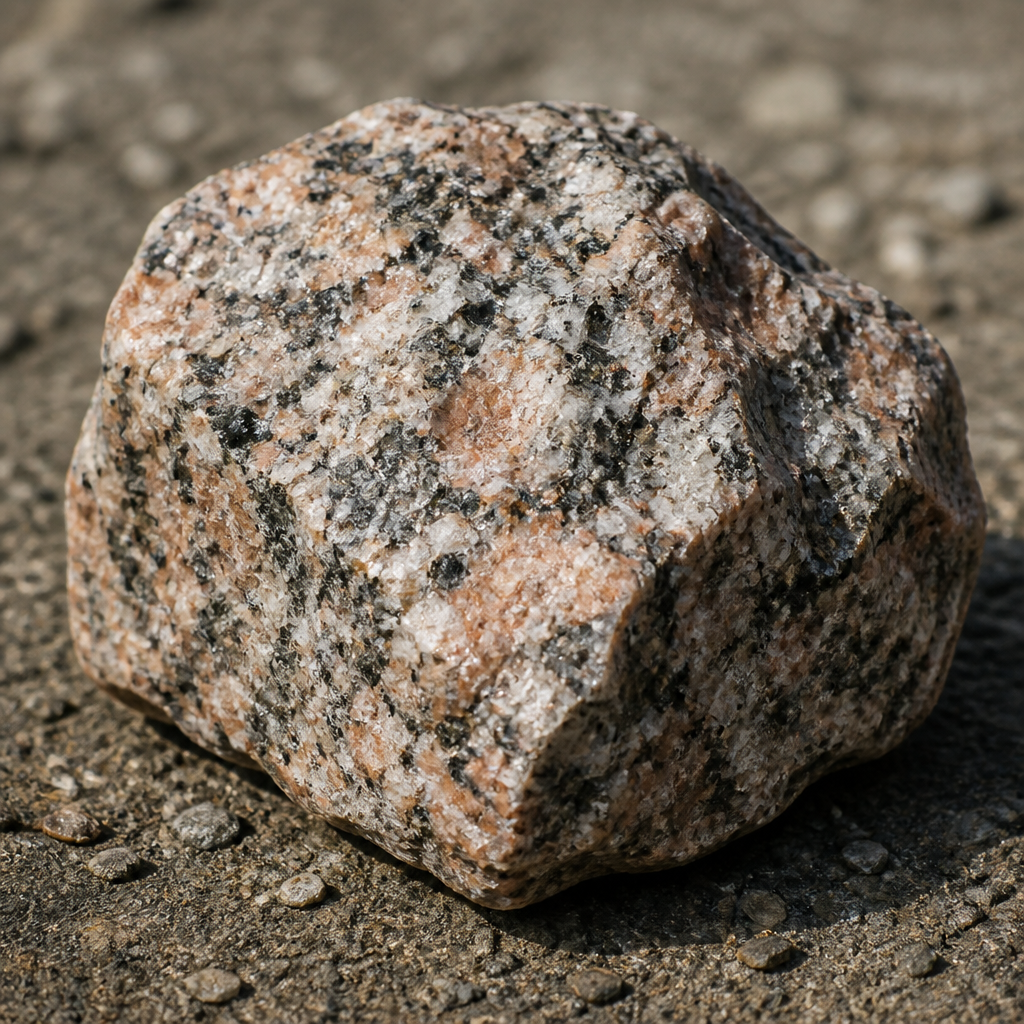
This is a close-up photograph of a chunk of rough granite rock. We can see that the rock has a textured, uneven surface with visible grains of quartz, feldspar, and mica. It sits heavily on the ground, clearly showing us that it is a small, solid, and dense object.
Prompt
How would you describe this object?