03
Given a paired view of a star at varying distance from the observer, the learner answers in two parts: Q1 'How does this star look — disk or point?' (correct response: 'a disk' when close, 'a point' when far) and Q2 'Why?' (correct response: 'because it is close' / 'because it is far'). The learner applies the rule across multiple stars (the Sun and Proxima Centauri) and accepts that the same body looks like a disk OR a point depending on distance.
- grade level
- 5
- frames
- 18
Now imagine you travel much farther, flying just past the icy planet Neptune. You are now very far from the Sun.
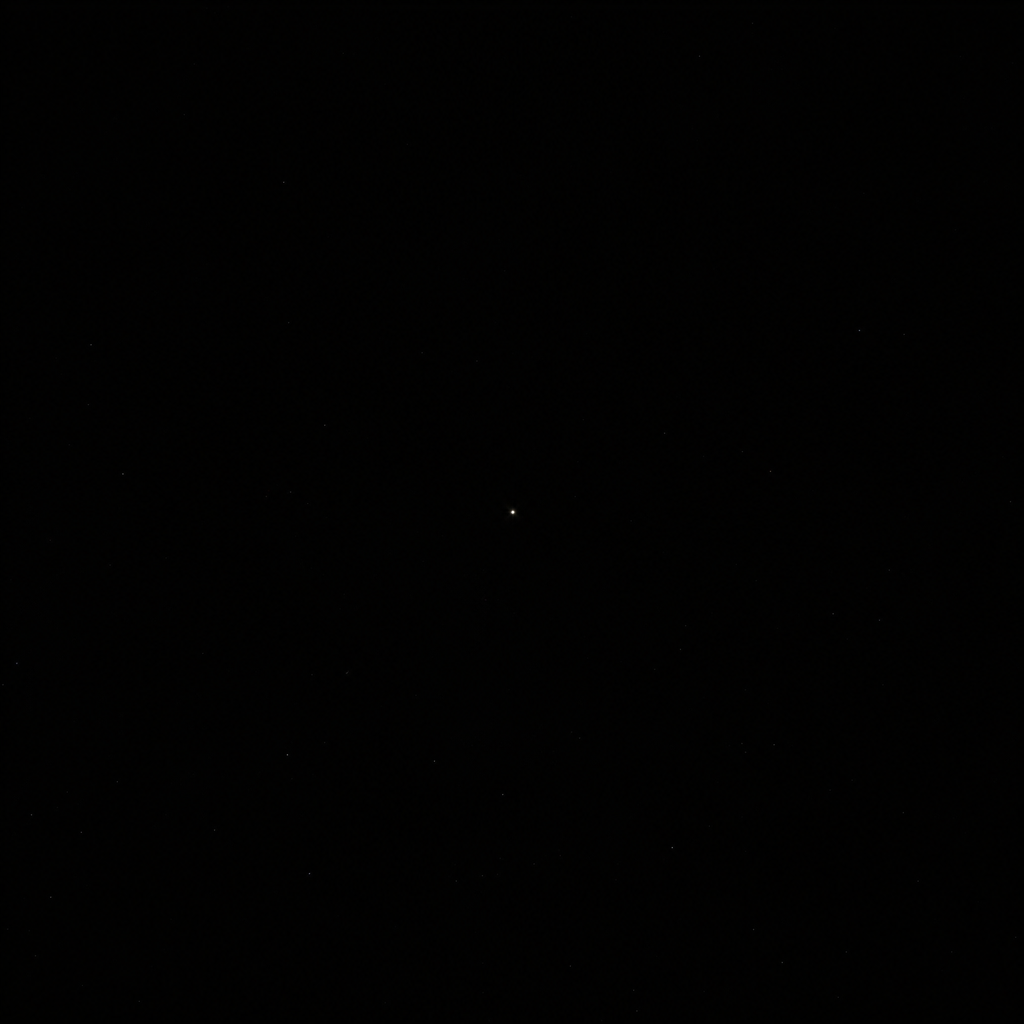
A freezing, completely dark view from just past the orbit of the distant icy planet Neptune, looking back at the Sun, which is now so incredibly far away that it has shrunk down to a single point of light.
Prompt
How does the Sun look from just past Neptune, and why?